How to Manage Daily Stress: Practical Techniques That Fit a Busy Life
Stress is not going away, but how your body handles it can change. Fast techniques that calm your nervous system in minutes, plus daily habits that lower your baseline.
- Author
- Strong Health Tips Editorial Team
- Published
- Reading time
- 5 min read

Stress has a bad reputation it does not entirely deserve. The stress response is what gets you through a deadline, a difficult conversation or a hard workout. It raises your heart rate, sharpens your focus and mobilises energy. The system is designed to switch on, deal with the problem and switch off again.
The trouble with modern life is not that it is stressful; it is that the switch-off rarely happens. Emails, news, money, family and work arrive in a continuous stream, and the body never gets the clear signal that the threat has passed. The result is a nervous system that idles too high: poor sleep, tension, irritability, a short fuse and, over time, measurable effects on blood pressure, immunity and digestion.
Managing stress, then, is mostly about two things: switching off faster in the moment, and lowering the baseline so there is less to switch off from. Here are the techniques for each, chosen because they have evidence behind them and fit into a day that is already full.
In the moment: calming down in minutes
Slow breathing with a long exhale
Your breath is the one part of the autonomic nervous system you can steer directly. Inhaling slightly raises heart rate; exhaling lowers it. Make the exhale longer than the inhale and you tip the balance towards the parasympathetic “rest and digest” state.
Try this: breathe in through the nose for a count of four, out through the mouth for a count of six. Repeat for two to three minutes. Sitting or standing both work; it can be done in a meeting without anyone noticing.
The physiological sigh
A 2023 Stanford trial compared several breathing practices and mindfulness over a month. The most effective for improving mood and lowering physiological arousal was “cyclic sighing”: a deep inhale through the nose, a second short inhale to fully inflate the lungs, then a long, slow exhale through the mouth. One to three of these is often enough to feel the shift. Five minutes a day produced the largest benefit in the study.
Change your physical state
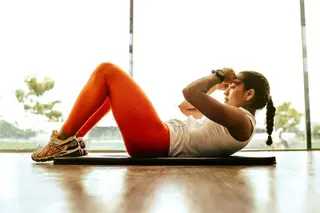
Stress lives in the body as much as the mind. A fast way to interrupt it is to do something physical for a minute or two: walk to the end of the corridor and back, do ten squats, stretch your arms overhead, splash cold water on your face. Cold water on the face in particular triggers a reflex that slows heart rate.
Name it
Simply labelling what you feel, in words, reduces activity in the amygdala, the brain’s alarm centre. “I’m anxious about this presentation” is more useful than a vague sense of dread. Writing it down for two minutes works even better and is one of the most replicated findings in stress research.
Lowering the baseline: daily habits
Techniques are patches. These habits are the operating system. Without them, the patches do not hold.
Sleep comes first
Sleep deprivation raises cortisol, increases emotional reactivity and reduces the brain’s ability to regulate itself. One short night makes the next day’s stresses feel roughly a third bigger than they are. If stress is high, protecting seven to nine hours is the single highest-return change, and our guide to sleep hygiene habits covers how.
Move most days
Regular exercise is one of the best-supported treatments for both anxiety and low mood, and it lowers resting stress hormone levels over weeks. It does not need to be intense. A daily walk outdoors does double duty: movement plus daylight plus, if you choose the route well, a few minutes of green space, which has its own calming effect in studies.
Eat regularly, and watch the caffeine
Skipping meals produces blood-sugar dips that feel a lot like anxiety: shakiness, irritability, difficulty concentrating. Regular balanced meals keep that steady. Caffeine, meanwhile, is a stimulant that raises cortisol and heart rate; if you are already running hot, the third coffee is not helping. Try halving it for two weeks and see how you feel.
Create a buffer between work and home
Working from home has deleted the commute, which for many people was the only transition between work-brain and home-brain. Rebuild one on purpose: a ten-minute walk, closing the laptop and putting it in a drawer, changing clothes, a short set routine. The content matters less than the consistency.
Limit the input
A lot of modern stress is imported. News and social feeds are designed to keep your attention through alarm. You do not have to opt out entirely, but you can choose windows: check news once or twice a day at set times rather than continuously, and keep phones out of the bedroom. Most people underestimate how much background anxiety this removes until they try it.
Protect connection
Time with people you like is one of the most protective factors against stress-related illness in long-term studies. It does not have to be deep. A phone call, a shared meal or a walk with a friend counts. Loneliness amplifies stress; company buffers it.
A realistic weekly plan
| Daily | Weekly |
|---|---|
| 5 minutes of slow breathing or cyclic sighing | 2 to 3 sessions of exercise beyond walking |
| A walk outdoors, ideally in daylight | At least one unhurried social contact |
| Fixed wake time, screens out of the bedroom | One block of time with no phone at all |
| News and social media at set times only | A short review: what drained you, what helped |
When to get help
Self-management works for the ordinary stress of a full life. It is not a substitute for treatment when stress has become something bigger. Talk to a doctor or mental health professional if you have felt unable to cope for more than a few weeks, if you are using alcohol or other substances to manage, if you are having panic attacks, if your mood is persistently low, or if you have thoughts of harming yourself. Cognitive behavioural therapy, in particular, has strong evidence for stress, anxiety and insomnia, and many health systems offer it without a referral.
Start with the breathing. It costs nothing, takes two minutes, and gives you a lever to pull the next time your body decides a crowded inbox is a predator.
Questions people ask
What is the fastest way to calm down when I am stressed?
Slow your breathing so the exhale is longer than the inhale, for example in for four counts and out for six, for two to three minutes. The long exhale activates the parasympathetic nervous system and lowers heart rate. The physiological sigh, two quick inhales through the nose followed by a long exhale through the mouth, works in as little as one to three breaths.
Does exercise really help with stress?
Yes. Regular moderate exercise reduces baseline levels of stress hormones, improves sleep and increases resilience to stressful events. Even a single brisk walk lowers anxiety for a few hours afterwards. The effect is strongest when exercise is regular rather than occasional.
Can stress make me physically ill?
Chronic stress is linked to higher blood pressure, poorer immune function, digestive problems, headaches, disrupted sleep and worsening of existing conditions. Managing stress is part of physical health, not separate from it.
When should I get professional help for stress?
If stress is persistent, you feel unable to cope, you are using alcohol or other substances to manage it, or you notice symptoms such as panic attacks, persistent low mood, or thoughts of harming yourself, speak to a doctor or mental health professional. In an emergency, contact your local crisis line or emergency services.
Sources
Not medical advice. This guide is general information and does not replace a consultation with a qualified healthcare professional who knows your history. Full disclaimer.
Written by
Strong Health Tips Editorial Team
We research, write and fact-check every guide against current guidance from major health bodies and peer-reviewed studies, then rewrite it in plain English. How we work.